Many people know how to help friends or family members who have been diagnosed with cancer or another life-threatening or chronic disease. But when the diagnosed individual is a parent who is increasingly drained both physically and emotionally, there are also needs of children to consider.

Below are suggestions, made by local cancer survivors and kids, on how to provide practical and emotional support. Whether the kids are your own or those of someone you love, there are ways for everyone to help.

Be upfront — but don’t over-dramatize.
Kids of all ages are surprisingly perceptive. By the time they learn of a parent’s illness, they probably already understand that something unusual is happening. Therefore, Parents, have a conversation sooner than later, even if you don’t know all the answers.

Britany Gipson, now 27, was 9 when her mother was diagnosed with breast cancer. “As a child, I remember being scared; I remember wanting to know what was going on,” she explains.

In most cases, honest, open communication about the disease, treatment plan and overall prognosis is best. In absence of an upfront explanation, kids invent their own internal stories that might be worse than reality. Establishing guidelines on what is “normal” during treatments (i.e. nausea, fatigue, hair loss, pain) sets expectations and alleviates unnecessary worry.

It is helpful to discuss the logistics of how kids will personally be affected. For example, explain that because Grandma is coming to stay for a while to help, the kids need to share a bedroom; or since Dad is having surgery, hugs will need to be extra gentle.

Kids may fear a parent is going to die. Don’t shy away from the subject; it is important to validate these concerns. But, never underestimate the power of a positive attitude; even when the outlook looks bleak, a parent telling her kids, “I have every intention of beating this” lets them know she plans to fight – and hopefully win.
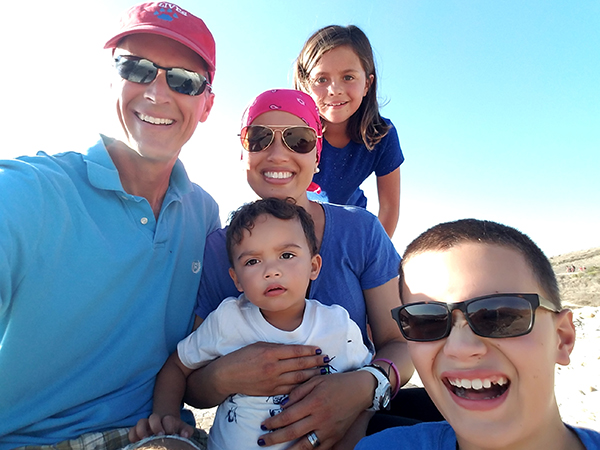
Jo and family 2133
Jo McDonald and family

Jo McDonald, 41-year-old mother of three, reflects on sharing her breast cancer diagnosis with the kids, “Adelaide (8) was in tears. After some coaxing, I was able to get her to articulate that she was afraid I wouldn't survive. I told her that was a very real concern.” Fortunately, after additional scans, McDonald learned a cure looked likely after months of grueling treatments including chemotherapy, surgery and radiation.

“I am not the type to dwell on hardship,” McDonald reflects. “You fix it and move on or do the best you can. Wallowing and self pity are not in my vocabulary; I think the kids took that attitude as well.”

Maintain “normal” — but don’t do it all on your own.
After her cancer diagnosis, Sandy Freiwald consulted a children’s therapist for advice on how to best support 8-year-old daughter, Genevieve. “She was a great resource and suggested that keeping things as normal as possible for Genevieve was the most important thing.”

Sandy and family 2133
Sandy Freiwald and family

One simple way to help is to offer rides to school or extracurricular activities. “The regular schedule of piano class and swim team practices really kept life going,” McDonald says.

Even when efforts are made to keep the kids’ lives normal, there will be times when it’s impossible (i.e. Mom missing a dance recital because she’s in the hospital, or well-intended visitors who disrupt family routine).

Let the kids know they’re supported — but don’t hound them.
Some kids want to share their feelings with everyone; some only share with immediate family; others won’t talk to anyone. Everyone handles challenges differently.

Whether you’re a parent, friend, relative or other influential adult, let the kids know you are a resource. Check in periodically by creating opportunities for safe discussion, but resist the urge to constantly ask, “How are you doing?” since this alone rarely opens lines of communication. Ask about something else instead: a math test, school project or soccer game. Perhaps kids will open up—or at least appreciate talking about something other than cancer.

“Emotionally, it helps to have someone who is just willing to listen to you vent and process—not necessarily someone who will have the answer for you,” says Macy, who was 17 when her dad was diagnosed with prostate cancer. 

Sharing basic information with teachers and other caregivers might be helpful, particularly for younger children. However, discuss this with older kids first—teens may prefer extra attention not be drawn to them.

Feed them — and don’t forget dessert.
Jonah, 13, whose mom was diagnosed with sarcoma cancer last year, still raves about meals brought by friends and neighbors during chemotherapy, “It was really nice how everyone contributed,” he says. “It made me feel like I had a lot of support and people really cared.”

Although difficult to predict a cancer patient’s appetite, the rest of the family will appreciate rotating meal deliveries from supporting community. Don't forget sweet treats! These courageous kids deserve a little extra indulgence.

____________

Lisa Pawlak was 9 years old when her mom was diagnosed with breast cancer, and is a two-time cancer survivor. Her courageous kids were 5 and 7 the first time, 13 and 15 the second.

Published January 2018

Strategies to Prioritize Mama’s Mental Health and Happiness

Strategies to Prioritize Mama’s Mental Health and Happiness

  As a mom, the “mother load” can feel so heavy. How am I supposed to maintain a home, excel in a career, sustain friendships, be a loving wife, raise good humans and stay sane, let alone do . . .

Read more

Anxiety in Children: How to Identify Signs and Symptoms

Anxiety in Children: How to Identify Signs and Symptoms

As a parent, it’s natural to worry about the emotional well-being of children and teens, particularly when kids are navigating social and academic pressures, family stressors, the impacts of scree . . .

Read more

Health & Wellness Guide 2026

Health & Wellness Guide 2026

  Whether you set an intention or make a plan, resolution or commitment, consider adding fitness, outdoor activity and a healthy lifestyle to the new year. San Diego Family's 2026 Health &am . . .

Read more

Lessons from a Sweet Tooth: What Parents Need to Know About Sugar

Lessons from a Sweet Tooth: What Parents Need to Know About Sugar

I won’t sugar coat this—it’s not uncommon for recovering addicts to use sweets to combat cravings. Why? Because sugar activates the same pleasure and reward pathways in the brain as nicotine a . . .

Read more

How Nutrition Impacts Brain Health for Kids

How Nutrition Impacts Brain Health for Kids

  Did you know that one of the most powerful ways to support your child’s overall well-being is by understanding the role nutrition plays in brain health? What children eat directly impacts th . . .

Read more

What is Misophonia? How sound causes anger and frustration in kids

What is Misophonia? How sound causes anger and frustration in kids

Not long after my 12-year-old daughter had (what I thought was) an extreme reaction to the sound of me eating a sandwich, we discovered she has a disorder known as misophonia. Misophonia is a neurol . . .

Read more

31 Ideas for Family Wellness

31 Ideas for Family Wellness

  Prioritize wellness and self-care this year by establishing new habits that promote family health and help manage stress for yourself and the kids. There’s no need to feel overwhelmed by thi . . .

Read more

Check Your Family’s Mental Health and Where to Find Help

Check Your Family’s Mental Health and Where to Find Help

Mental health challenges among kids and teens have been on the rise, and in recent years they have skyrocketed. According to a recent joint declaration from the American Academy of Pediatrics, Ameri . . .

Read more

Pandemic Pitfalls: What to know about developmental delays in children

Pandemic Pitfalls: What to know about developmental delays in children

An interview with Tracy Tasker, MA, CCC-SLP In the wake of the COVID-19 pandemic, researchers have observed an increasing number of children with developmental delays. While the numbers are con . . .

Read more

The Secret to Family Fitness: Focus on Playtime!

The Secret to Family Fitness: Focus on Playtime!

According to The American Academy of Pediatrics (AAP), “Play is brain building, a central part of healthy child development, a key to executive function skills, and a buffer against the negative i . . .

Read more

How Digital Devices Affect Eyes: What you need to know about Computer Vision Syndrome

How Digital Devices Affect Eyes: What you need to know about Computer Vision Syndrome

Does your technology-fixated child ever complain of dry, irritated eyes? What about blurry vision, headaches, light sensitivity, neck and shoulder pain, or fatigue? You might look to his electronic . . .

Read more

How Nature Helps Beat the Winter Blues

How Nature Helps Beat the Winter Blues

San Diegans have some of the best weather in the country, but they are not immune to winter blues. While some people love snow trips and bundling up in warm clothes, others dread cooler weather and . . .

Read more

What’s the BUZZ: Are energy drinks safe for kids?

What’s the BUZZ: Are energy drinks safe for kids?

  Perhaps you saw in the news recently that Panera has been charged with two deaths associated with a drink on their menu called Charged Lemonade. While there were likely special circumstances i . . .

Read more

New Year, New Moves: Fun ways to exercise as a family

New Year, New Moves: Fun ways to exercise as a family

   Whether you have goals, resolutions, visions, mantras or targets for the New Year, one popular topic on people’s minds is exercise. And why not? In addition to helping prevent a slew o . . .

Read more

How to Keep Tabs on Stress and Anxiety in Kids

How to Keep Tabs on Stress and Anxiety in Kids

The pandemic created an undercurrent of anxiety that continues to impact families even while adjusting to working and schooling from home, wearing masks and social distancing. Combined with the unce . . .

Read more

2026 Family Fun Runs and 5K Events in San Diego County

2026 Family Fun Runs and 5K Events in San Diego County

Ready to start the year on the right foot? Here's a list of 2026 family fun runs and 5K running and walking events in San Diego County that the whole family can participate in. Get outside and have . . .

Read more

San Diego Cancer Support Groups and Resources

San Diego Cancer Support Groups and Resources

A cancer diagnosis is difficult for everyone involved. These local San Diego companies offer support and resources to help cancer patients and their families navigate the path to health and healing. . . .

Read more

How to Support Kids When a Parent Has Cancer

How to Support Kids When a Parent Has Cancer

Many people know how to help friends or family members who have been diagnosed with cancer or another life-threatening or chronic disease. But when the diagnosed individual is a parent who is increasi . . .

Read more

Teaching Kids About Money

Teaching Kids About Money

It's never too early (or late) for parents to teach kids about money. Specifically, to discuss saving, spending and borrowing money—and sharing our resources. According to Brad Benter, a fina . . .

Read more

How to Protect Kids from Anxiety Overload

How to Protect Kids from Anxiety Overload

Anxiety in kids is on the rise, and it doesn’t take too much digging to uncover some of the reasons why. With increased pressure inside and outside of the classroom, children’s performance is me . . .

Read more

Be Family Informed – Sign up for our Newsletters below!

Subscribe