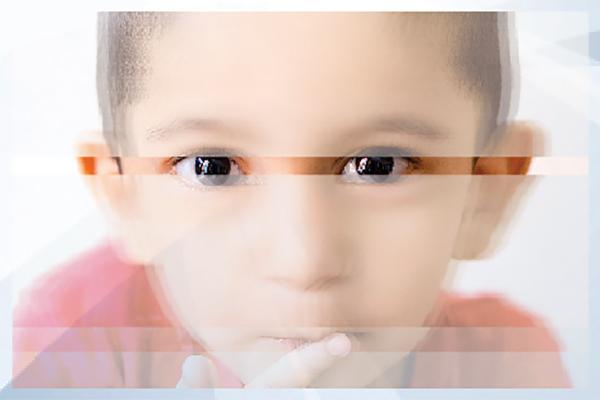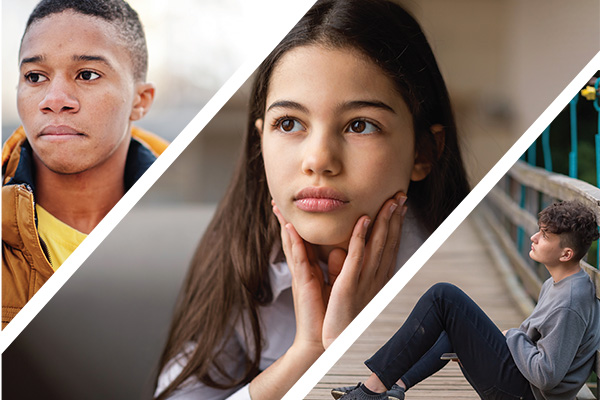
As a parent, it’s natural to worry about the emotional well-being of children and teens, particularly when kids are navigating social and academic pressures, family stressors, the impacts of screen time and social media, negative news stories and more.
Anxiety is the most common mental health concern among youth, but identifying it early can be tricky. Kids often have a hard time expressing how they feel, especially if they don’t fully understand it themselves. So how can parents determine if kids are experiencing anxiety? It’s a good idea to start with your healthcare provider. In addition, below are guidelines to help recognize signs of anxiety, the difference of how it manifests in children versus teens (there are some overlapping symptoms), and when to seek professional help.
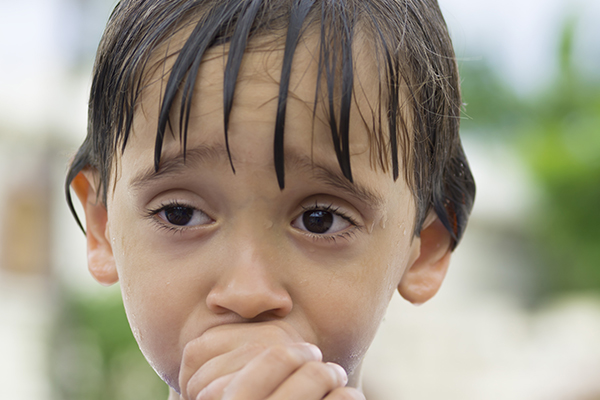
Children: Signs and Symptoms
Physical or somatic complaints: Anxiety can cause physical symptoms that mimic illness. Children may report stomachaches, headaches or other physical discomfort without a clear medical cause.
Clinginess or difficulty separating from parents: Younger children may be unusually clingy, not wanting to be separated from parents or caregivers, especially in new or unfamiliar situations, such as school or daycare.
Meltdowns, irritability or tantrums: Anxiety can cause frequent meltdowns. Children may seem more sensitive, cry over small things or experience extreme emotional outbursts, especially in response to changes, stressors or overwhelming situations.
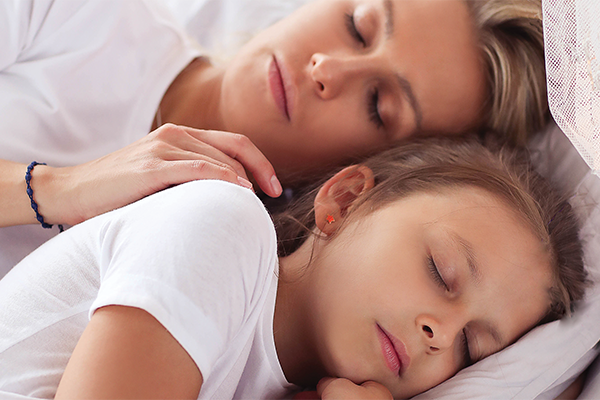
Sleep disturbances: Difficulty falling asleep, nightmares or waking up throughout the night.
Avoidance behavior: Younger children may avoid school, social activities or things they used to enjoy by showing fear or reluctance to engage.
Over-eagerness to please: Some children with anxiety may be overly concerned with being “perfect” or trying to please adults.
Restlessness or fidgeting: Anxiety can make it difficult to sit still. Kids may be jittery or appear to be on edge.
Frequent worry: Children may communicate or express fears, such as worrying excessively about getting lost, about family members being hurt or general safety concerns.
Difficulty concentrating: Frequent distraction and inability to focus on tasks may be a warning sign.
Regression: Younger children may revert to earlier developmental behaviors like thumb-sucking or bed-wetting.
Teens: Signs and Symptoms
Withdrawal and isolation: Teens often withdraw from friends or family events, which could be mistaken for “typical teenage behavior.”
Avoidance of school or social activities: Teens may skip school, avoid social gatherings or make excuses to stay home.
Perfectionism and fear of failure: Teens may become obsessed with academic performance or personal achievements, driven by a fear of failure. They may set high and unrealistic expectations for themselves regarding performance, including feelings of inadequacy and disappointment for any less than perfect grades.
Irritability and mood swings: Increased irritability, frustration or anger may be more pronounced than typical teenage hormone fluctuation.
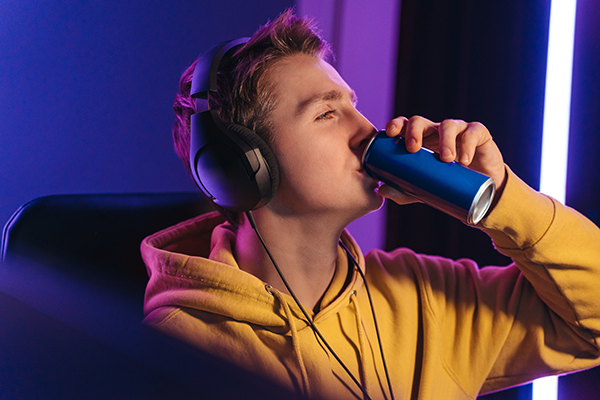
Substance use: Some teens experiment with drugs or alcohol to cope with anxious feelings, even using prior to social events as a means of self-medicating social anxiety.
Restlessness and trouble focusing: Difficulty focusing in school or work, restlessness, declining academic performance or feeling overwhelmed by responsibilities.
Increased screen time: Dependence on electronic devices to distract from anxiety is common. Teens often use digital communication in place of in-person socialization, which may lead to conflict with parents about screen time limits and rules.
-> Read the award-winning article, “What Parents Need to Know about Technoference,” for more tips about kids and screen time: www.sandiegofamily.com/parenting/how-parents-and-kids-are-impacted-by-technology.
Sleep and eating problems: Disrupted sleep patterns including difficulty falling asleep, staying asleep or sleeping too much; changes in eating habits, such as an increase or decrease in appetite.
Negative self-talk: Heightened self-criticism, negative thinking or catastrophizing situations.
Panic attacks: Some teens experience sudden episodes of intense fear, heart palpitations, chest pain or difficulty breathing, known as panic attacks.
Anxiety and ADHD are two of the most commonly misunderstood mental health challenges—especially for teen girls. It’s not unusual for a teen to have both. To learn more, read the article “Understanding the Difference Between Anxiety and ADHD in Teen Girls” at www.lajollatherapycenter.com.
When to Get Help
Some level of anxiety is normal and can even effectively motivate people to take action. It is important to know when to seek professional support or intervention. Indicators include:
Persistent and excessive worry: If your child is experiencing frequent and overwhelming worry or fear that seems disproportionate to the situation and lasts for weeks or months.
Physical symptoms: Frequent complaints of physical symptoms with no apparent medical cause (headaches, stomachaches, feeling sick).
Sleep problems: Disruptions in sleep patterns related to fears or worries that last for several weeks.
Consistent avoidance: Regularly avoiding activities such as school, social activities or things they used to enjoy.
Anxiety affects daily life: Fears or worries interfere with their ability to function at school, at home or in social settings.
Emotional outbursts: Increasing and frequent temper tantrums, irritability or verbal aggression in response to feeling overwhelmed or worried.
Safety concerns: If your child or teen expresses thoughts of self-harm, harming others or not wanting to live anymore. For local 24/7 support, call the San Diego Access & Crisis Line at 1-888-724-7240.
If your child or teen is struggling with anxiety, help is available. When searching for professional support, look for treatment that includes cognitive-behavioral therapy, relaxation training and parent training. Parenting is hard; you don’t have to do it alone.
Kelly McCullough is a licensed clinical social worker (LCSW) and the director of La Jolla Therapy Center.