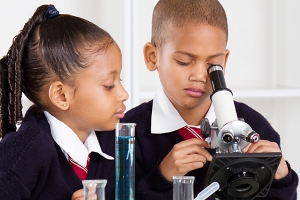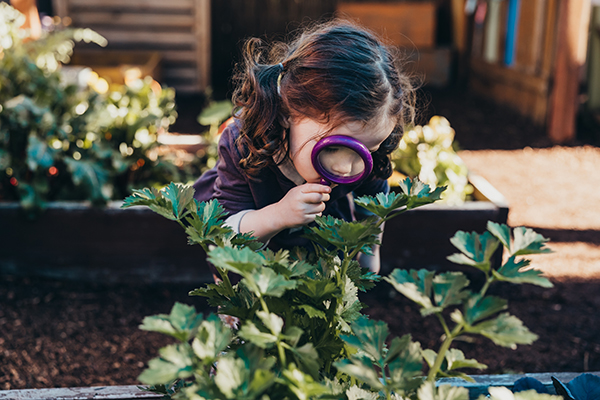
Science often begins with a simple magnifying loupe (or magnifying glass)—the kind that fits easily into a pocket or kitchen drawer. Place it in a child’s hand and something powerful happens: time slows. The loupe gives permission to linger. To stare. To return to the same ordinary thing again and again, without needing an immediate answer. Skin becomes a landscape of ridges and valleys. Dust gathers in unexpected constellations. Dirt hides in crevices between floorboards. A spider, once dismissed or feared, turns into an eight-legged marvel with jointed limbs and glistening eyes.
Magnifying tools remind children (and adults) that “close looking” has a name, a history and a place in how humans come to understand the world. This is science at home: close, curious and wonderfully low-tech. Magnification is a powerful gateway to discovery because it changes scale, and scale changes thinking.
- What is Close Looking? Close looking, also known as slow or deep looking, is intentional, unhurried observation that allows time and space for surprising details to emerge.
Using a loupe causes children to ask like: Why does it look like that? How small can we go? How do microscopes work? These questions open doors to optics, biology and engineering without ever announcing themselves as “lessons.” A loupe, then a stronger magnifier, then a simple digital microscope clipped to a phone—each step invites deeper investigation. The goal is not to get answers, but to encourage attention.
In a digital era defined by speed and scrolling, attention matters. Tools like loupes quietly cultivate the same skills that good technology requires—focus, interpretation, comparison—and close looking prepares children to use them well. A phone becomes an extension versus a distraction—another instrument for inquiry.
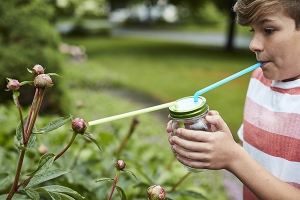
Once children learn to look closely indoors, the habit travels easily outside. Close looking outdoors helps kids understand how the world works. What appears insignificant at first glance may matter more upon closer inspection. A leaf’s surface shows signs of insect damage. Soil texture hints at moisture below. A spider’s web reveals both engineering and adaptation. These observations build a habit that humans have relied on for generations: slow down, look carefully, adjust accordingly.
Awareness and careful examining foster the ability to notice small details before they become big problems—they can even lead to survival (in the wilderness or in everyday life). As kids grow, they learn to read landscapes, recognize patterns and respond thoughtfully to changing conditions. Water leaves clues. Plants respond to light and stress. Weather signals what is coming next. The science is not announced; it is discovered through observation.
Encouraging close looking at home and around the neighborhood does more than spark curiosity. It builds perceptiveness and discernment. Children learn the essential skills of pausing, comparing and making sense of what they see before acting. Science may begin with a loupe, but it ultimately teaches how to notice what matters.
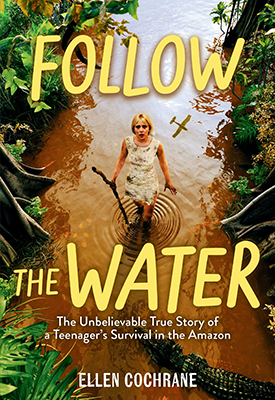
Ellen Cochrane is a California naturalist, former teacher and the author of Follow the Water, the incredible true story of a teen who fell out of a plane over the Amazon and survived in the jungle alone for 11 days.
Top photo courtesy of Children's Museum of Discovery
Activities/Books that Support STEM Learning
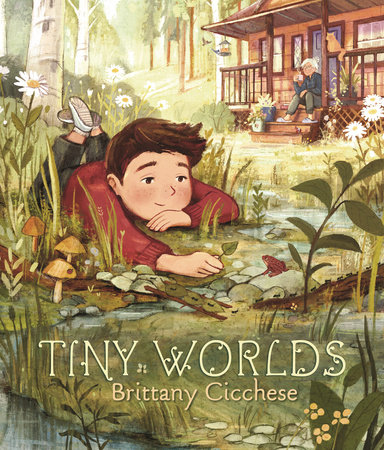
Tiny Worlds
www.candlewick.com
A touching story by Brittany Cicchese about a little boy who find greatness in small things all around him, inspiring kids (and adults) to slow down and appreciate the little things in life and in our world.
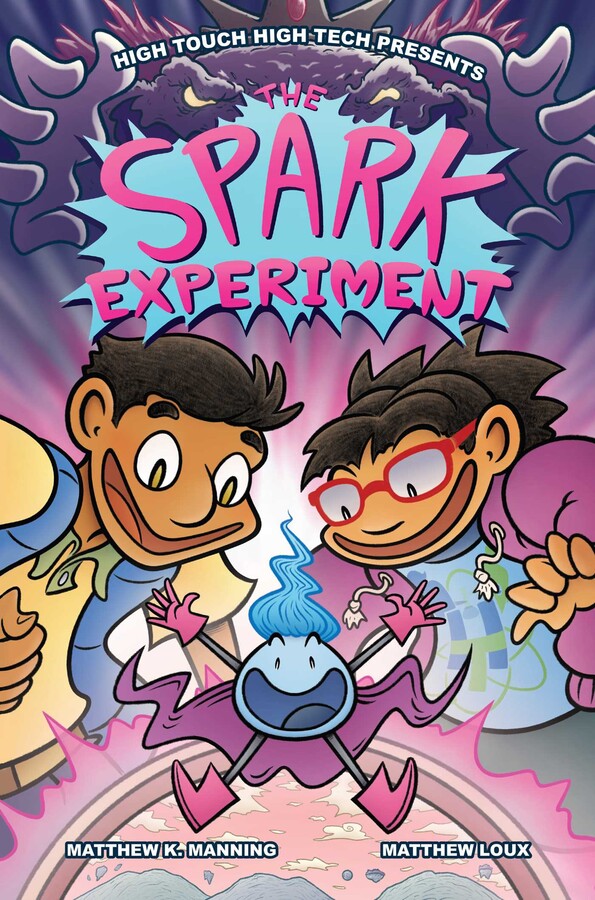
The Spark Experiment
www.thesparkuniverse.com
This graphic novel by Matthew K. Manning engages young readers while offering fun, hands-on experiments to do at home, encouraging curiosity and imagination.
Discover more STEM activities, products and books at www.sandiegofamily.com/for-the-kids/kid-tested-toy-product-review/stem-toys-and-games.