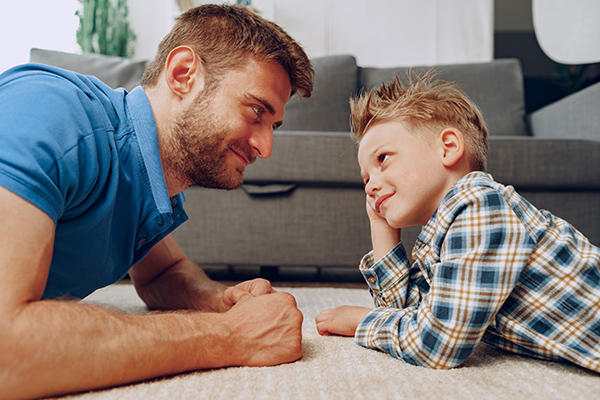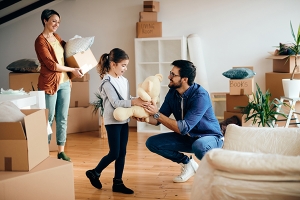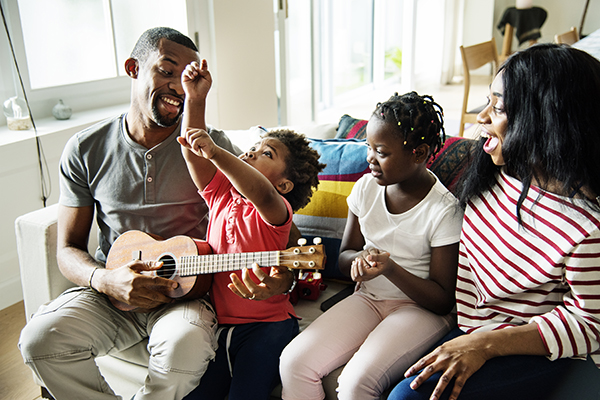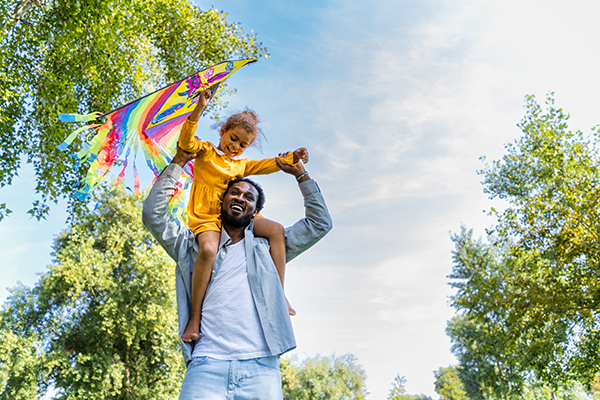
Research shows that dads today spend nearly three times as many hours with their children than fathers did in the 1960s.
Today’s dads are redefining fatherhood. By embracing vulnerability, hands-on caregiving and a deeper emotional connection with their kids, they’re not only evolving antiquated societal expectations; they’re modeling a more engaged version of fatherhood for the next generation.
This isn’t to say past generations were lacking—beliefs and needs were different. Today’s shift in modern fatherhood is largely driven by societal changes, from progressing workplace policies to shifting gender roles. One clear reflection of this change is depicted in media, where dad roles have moved from distant authority figures to more engaged, emotionally present caregivers.
The Evolution of On-Screen Dads
It’s often said that media reflects real life, which makes the portrayal of fatherhood on screen especially telling (and impactful). Over the years, we’ve watched dads from George Banks (Mary Poppins) and Captain von Trapp (The Sound of Music) who model authority over affection, to fathers like Phil Dunphy (Modern Family) and Randall Pearson (This Is Us), who are involved, vulnerable and emotionally supportive.
Perhaps one of the most iconic examples of modern fatherhood is Bandit Heeler from the animated series Bluey. Playful and patient, Bandit could be considered the gold standard. In an interview with The Father Hood blog, Bluey creator Joe Brumm shared that the character was inspired by today’s dads. “They’re across everything,” Brumm says. “Housework, kids, work, the lot. Compared to my dad’s day, we’ve just had a slow, generation-by-generation change to the point we’re at now, where being a dad just seems like an all-in.”
Redefining Gender Roles
Dual-income households and a narrowing wage gap have led many families to reconsider how responsibilities are divided at home. With so many mothers in the workforce, caregiving roles have adapted and evolved. According to James K. Rilling, psychology professor and author of Father Nature: The Science of Paternal Potential, the number of stay-at-home fathers has more than doubled over the past two decades.
“Today, many couples recognize that both men and women bring different strengths to the relationship and are more intentional about sharing household, parenting and work responsibilities accordingly,” says Eric Freund of Hope on the Hard Road in Escondido, which supports families raising children with special needs. “There’s more of a team mindset… for many families, that means creating work arrangements that allow both parents to be present and engaged with their children.
Paternity Leave
Another factor impacting modern fatherhood is paternity leave. While the U.S. still lags behind many countries regarding paid maternity and parental leave, more companies are beginning to recognize the value of giving fathers time to bond with their newborns and support their partners.
Early fatherhood involvement has a lasting impact. “Studies in both Europe and the U.S. show that when fathers take time off work when their baby is born, they become more involved in caring for the child…[even] later in childhood,” says Rilling. Being present in those early days, weeks and months doesn’t just support mom; it establishes a stronger family foundation.
The Facts of Fatherhood
A father’s presence plays a meaningful role in a child’s overall development, with research consistently linking involved dads to positive long-term outcomes. Children with encouraging and engaged fathers tend to experience fewer mental health challenges, lower levels of aggression, stronger relationships and improved outcomes across the board and later in life. That impact shows up in surprisingly specific ways. According to Rilling, a father’s (not mother’s) vocabulary use with a 2-year-old helps predict language development at age 3.
The Modern Dad Dilemma
With this new normal comes uncharted territory. Without a clear roadmap, dads are forging their own path—learning in real time how to balance presence, partnership and pressures of modern life.
With so much understandable focus on supporting overwhelmed moms with the “invisible load,” it’s easy to overlook dads carry a lot, too. Many are still primary providers while navigating increased expectations at home. Creating space for dads to talk openly about feelings or experiences—and encouraging them to lean on one another—is important. Just like moms, dads need support, connection and time to recharge.
For most, it’s all worth it. “Fatherhood has given me purpose,” says Deren Schneider of Rancho San Diego. “Being an older dad, I was able to get the majority of my travel, racing, band touring and adventure boxes checked off [when I was younger]. My identity now is being a good and present father.”
Screen-Free Ways for Dads and Kids to Connect
- Get outside: Go fishing, toss a ball or take a walk outdoors to naturally spark conversation.
- Build something together: Whether a Home Depot workshop or a model airplane, it’s about the experience, not the final product.
- Play their way: From tea parties to building the same LEGO set over and over, when parents enter a child’s world, kids feel seen.
- Catch a game: An easy and natural way to connect, whether it’s the child’s game, a local high school or college tournament, or professional game. Use the opportunity to talk about teamwork, effort, winning and losing.
- Create a simple ritual: Consistency matters more than complexity. Think Saturday donuts, afterschool walks or weekly “dad dates.”
Jennifer Garcia is a freelance writer based in Lakeside, wishing a Happy Father’s Day to dads of all generations, including biological, adoptive and stepdads!
Looking for ways to connect with other fathers? Read our article The Dads Club: Why to Meet Up with the Guys at www.sandiegofamily.com/parenting/san-diego-groups-for-dads.