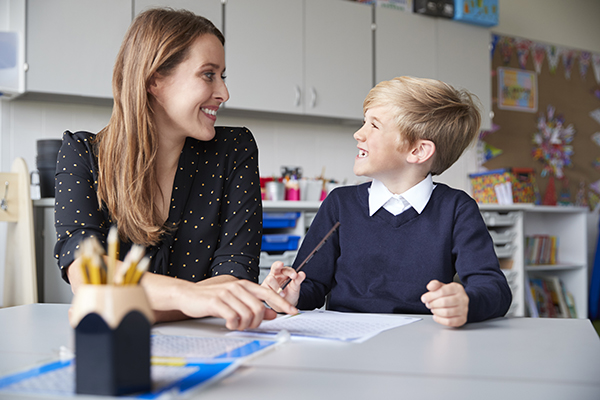
Two primary schoolgirls doing homework in school library.

For generations, traditional education has grouped children by age, based on the idea that students learn at the same rate. While there is value in single-age classrooms, there's something special about children learning alongside peers of varying ages. Whether it's through school, afterschool activities or everyday play, multi-age learning creates dynamic opportunities that can't be replicated in a single-age environment.

Outside of school, kids play with siblings, cousins, neighbors and friends who may be several years older or younger. They watch older kids climb higher, build bigger, read more confidently and solve problems in new ways. At the same time, older kids instinctively help younger ones, teaching them the rules of a game or lending a hand when needed. Multi-age learning encourages the development of these natural relationships and educational opportunities.

Older children naturally step into leadership roles. When they explain a concept, demonstrate a skill or help a younger child figure out a problem, they're simultaneously strengthening their own understanding. Teaching a fellow student requires patience, communication and confidence; it's an excellent way to master a skill. Kids begin to see themselves as helpers and mentors.

Outcomes are equally beneficial for younger kids. Spending time with older peers exposes them to new vocabulary, more advanced problem-solving skills and different ways of thinking. Watching older kids read fluently or build an intricate LEGO creation sparks curiosity, gives younger learners a goal to aspire to and encourages them to try new things.

Lindsey Burke, a local San Diego mom, loved the year her second grader was in a mixed-age classroom with third graders. “My daughter loved being grouped with older students,” Burke says. “She looked up to them and raved about how helpful the older kids were. She was excited to learn and came home happy every day.” 

One refreshing aspect of multi-age learning is that it promotes collaboration versus competition. It's not uncommon for children to compare themselves to classmates, but in mixed-age environments, differences in skills invite teamwork that boosts confidence. 

“The next year, my daughter was the older student in a mixed-age class,” says Burke. “[My daughter] became more patient, flexible and empathetic. She’ll carry these skills with her long after elementary school.”

Beyond academics, multi-age learning is a wonderful way to nurture social and emotional growth. Younger children learn by watching older peers model kindness, responsibility and cooperation. Older kids develop empathy as they practice patience and provide encouragement. These everyday interactions help children build emotional intelligence, strengthen communication skills, and learn how to navigate relationships with people at different stages of development.

“We often see individuals become more motivated when they observe a peer trying a new activity, practicing a skill or reaching a goal,” says Alicia Gendron of Spread Your Wings LLC. Peer modeling provides opportunities for people of varying ages and abilities to observe how others communicate, solve problems and manage responsibilities. 

At San Diego Jewish Academy (SDJA), collaborations across grade levels have proven to be highly beneficial. Zvi Weiss, SDJA Head of School, says that learning alongside peers of different ages reinforces many values that are at the core of their community, including empathy, responsibility, honor and respect. Second graders serve as reading buddies for Pre-K students, and fifth graders meet with 3-year-olds to create activities that support learning. 

“The older children build leadership skills and confidence … and the younger children get very excited about activities they plan and lead,” says Shereen Ben-Moshe, director of the Early Childhood Center at SDJA.

Recently, a group of SDJA middle schoolers read a story to preschool kids. They practiced independently to strengthen storytelling skills and crafted puppets that helped bring the story to life. This experience helped build leadership skills in the middle school students and inspired the preschoolers to retell the story, using the puppets. One child drew a picture of himself reading with his middle school partner, noting, "When I am big, I want to read like my buddy.”

When children of varying ages and abilities learn, play and grow together, they develop stronger academic skills, leadership, empathy, communication skills and confidence that prepare them for diverse social and academic situations in school and in life. Perhaps the best classrooms are the ones where each student has something to teach and something to learn.


Amanda Cavallari is a lifestyle writer residing in San Diego with her husband and four kids.


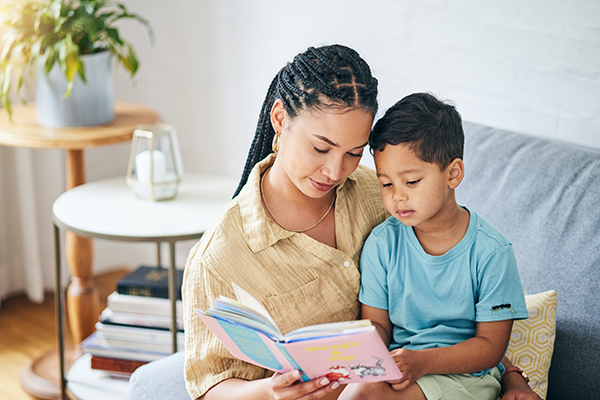
Growing Together in San Diego: The benefits of multi-age learning 

Growing Together in San Diego: The benefits of multi-age learning 

For generations, traditional education has grouped children by age, based on the idea that students learn at the same rate. While there is value in single-age classrooms, there's something special a . . .

Read more

Write on! Encouraging kids to put pen to paper

Write on! Encouraging kids to put pen to paper

Step aside, ChatGPT. We’d like to prompt today’s digitally driven youth to explore writing the old-fashioned way—by placing pen to paper. Increasingly, students are using generative AI to “w . . .

Read more

17 Ways to Celebrate National Literacy Month

17 Ways to Celebrate National Literacy Month

  It’s always an appropriate time to spotlight the importance of reading and writing skills, and especially during National Literacy Month in September. Below are 17 ways for parents, caregive . . .

Read more

Education Guide - Fall 2026

Education Guide - Fall 2026

Where to send kids to school is a big decision on every parent's mind right now. Our education directory features educational options in San Diego County with a variety of learning environments—pu . . .

Read more

New Career in a Year: Ideas for parents going back to school 

New Career in a Year: Ideas for parents going back to school 

Ready for a new career? Consider going back to school! The options below offer flexible learning (often at a reasonable price) that can launch parents and caregivers into a new industry in about a y . . .

Read more

How Reading and Storytelling Support SEL

How Reading and Storytelling Support SEL

  Did you know that interactive storytelling supports social-emotional learning (SEL) and the development of literacy skills? That’s right—sharing stories actually teaches children to build . . .

Read more

How to Choose a Private School

How to Choose a Private School

  If you’re thinking about enrolling your children in a private school, there are many important factors to consider. As an elementary school teacher who has taught at private schools (both in . . .

Read more

How to Get Organized Before School Starts + Routines Checklist

How to Get Organized Before School Starts + Routines Checklist

As you enjoy the last lazy summer days, it’s time to start thinking about the new school year. Regardless of what emotions that reality evokes for you, there are practical steps families can take . . .

Read more

Help Kids Develop Math Skills (even when math isn’t your best subject)

Help Kids Develop Math Skills (even when math isn’t your best subject)

I often wonder if my children will get my best or worst traits. From physical appearance to my affinity or disdain for certain foods, I marvel at how genetics works. When it comes to math ability, y . . .

Read more

Math Scavenger Hunt for Kids

Math Scavenger Hunt for Kids

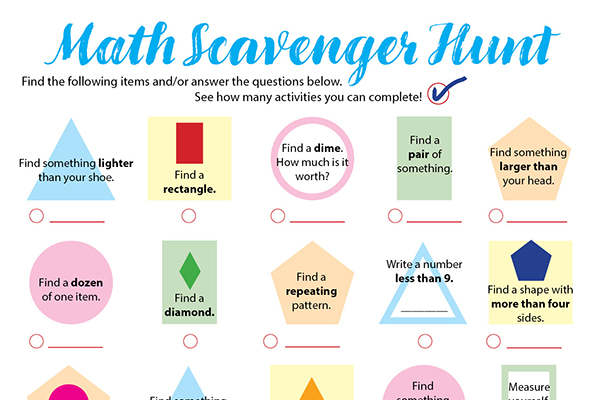
Have you ever been on a math scavenger hunt? San Diego Family Magazine created a free, printable math scavenger hunt to help families with kids ages 4–10 take note of patterns, numbers, shapes and m . . .

Read more

Fun Activities for Kids: Celebrate 100 Days of School

Fun Activities for Kids: Celebrate 100 Days of School

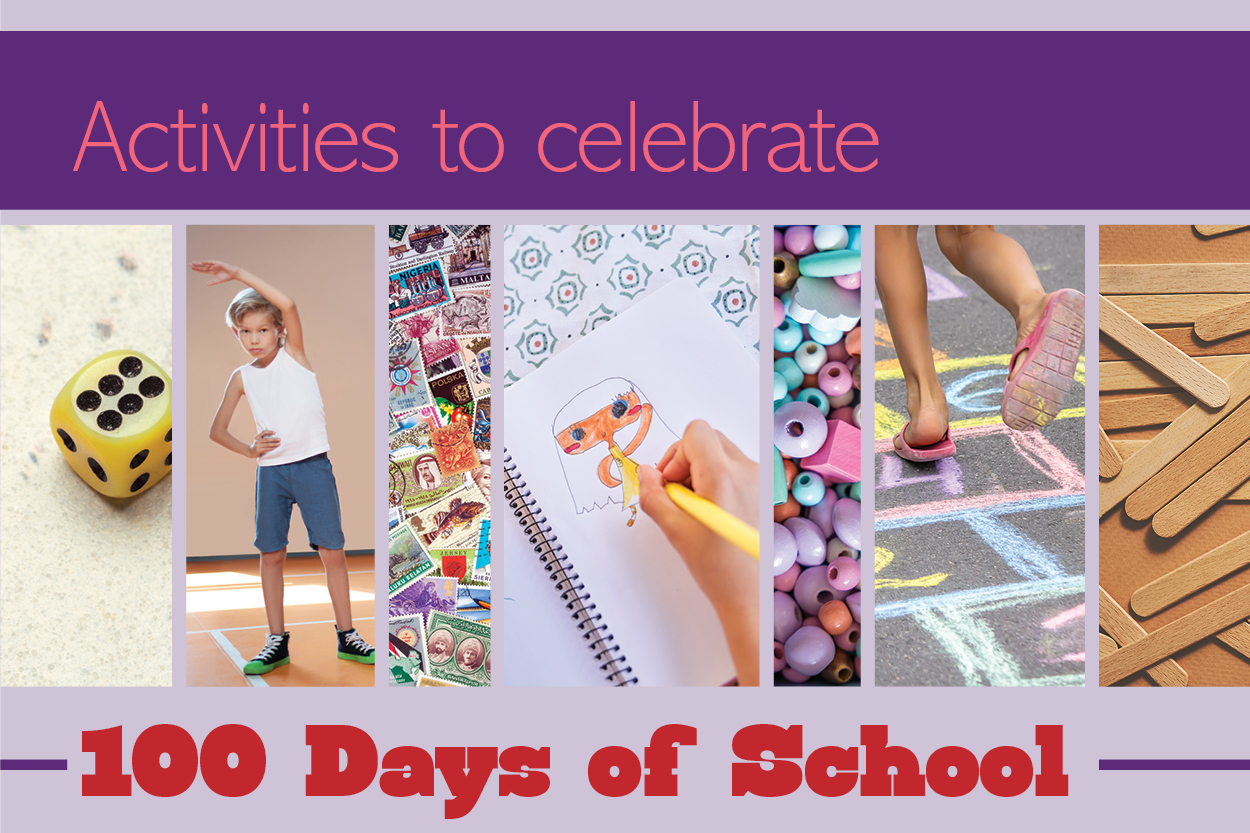
  The purpose of celebrating 100 days of school is to have fun while reinforcing reading, writing and math skills kids have learned so far at school. Plus, hands-on activities are what make lear . . .

Read more

Learning Outside the Box: Education Options for Families

Learning Outside the Box: Education Options for Families

As families seek flexible approaches to educating their kids, alternatives to traditional schooling have become more popular. From modern-day homeschooling to worldschooling, these education options o . . .

Read more

25 Activities that Help Kids with Math

25 Activities that Help Kids with Math

Is math homework giving you a headache? Do you dread hearing the words, “I hate math!” While math may not appeal to some children, it is helpful to everyday living, and strong math skills can op . . .

Read more

What’s Your Child’s Preferred Learning Style?

What’s Your Child’s Preferred Learning Style?

Most of us know that people learn in a variety of ways — perhaps you’ve noticed kids who count on their fingers, prefer to read aloud or always write things down. But did you know that there are . . .

Read more

Questions to Ask When Considering Private School

Questions to Ask When Considering Private School

It’s easy to conduct an internet search and find a multitude of links that list the best private schools in San Diego, but it’s important to understand that what’s best for one family or stude . . .

Read more

How to Find the Right Preschool

How to Find the Right Preschool

Choosing the right preschool is an important decision for parents. For some, it will be the first time a stranger will watch and care for their child. Here are tips to help make the right decision.C . . .

Read more

Raising Avid Readers

Raising Avid Readers

Raising readers offers a host of cognitive, behavioral and social-emotional benefits, including language development, increased vocabulary and improved attention span as children learn to process em . . .

Read more

Homework Help: Apps and San Diego Tutoring Services

Homework Help: Apps and San Diego Tutoring Services

After a year of online learning during the pandemic, many students fell behind and are still struggling to catch up. Every student needs homework help at some point—sometimes more support than a p . . .

Read more

Be Family Informed – Sign up for our Newsletters below!

Subscribe